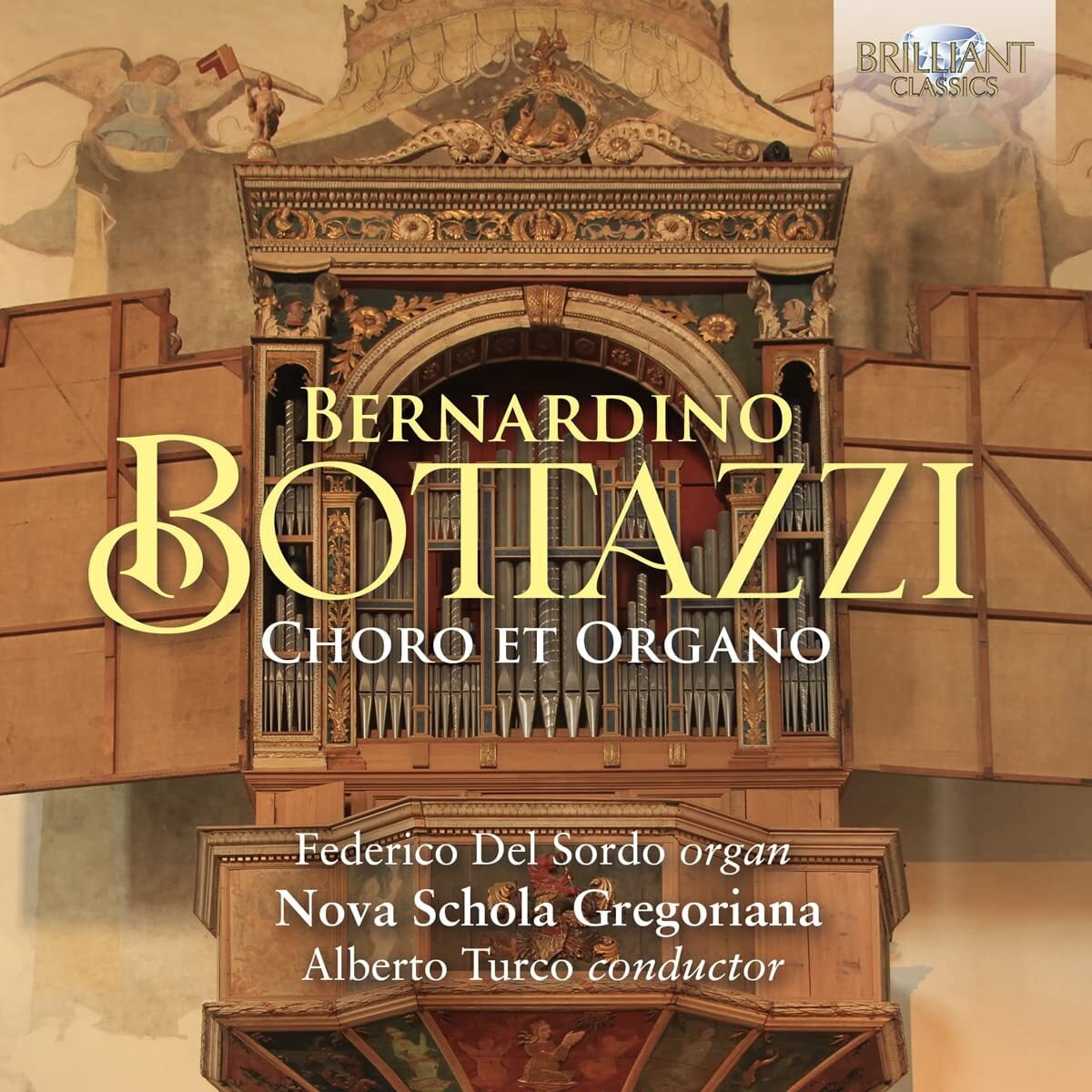
Federico Del Sordo - Choro et Organo - Music & Performance - CD
Product details
| Management number | 255129750 | Release Date | 2026/11/21 | List Price | US$6.21 | Model Number | 255129750 | ||
|---|---|---|---|---|---|---|---|---|---|
| Category | |||||||||
Choro et Organo by Bernardino Bottazzi (1560-1614) may be considered the most extensive and best-known collection of Italian organ works from the early 17th century. In the beautiful edition printed by Giacomo Vincenti, the musical notation used relates to a tradition that is more Renaissance than early baroque: namely, Italian tablature for organ (in this case, with an eight-line stave for the left hand and one of five lines for the right). There are 22 hymns in Choro et Organo. For some of these, Bottazzi's organ verset is identical, for example Christe Redemptor omnium, whose melody is the same as that sung for the feast of All Saints although with a slightly different text. We know for certain that vocal forces and organ followed a pattern of alternation which, in Bottazzi's case, seems fully in line with the practices as evidenced by analogous works from the same period: 5 versets for the Kyrie, 9 for the Gloria, 2 for the Sanctus and just 1 for the Agnus Dei, given that - according to Adriano Banchieri (1608) - the last of the three Agnus Dei would be replaced by an organ composition, generally a canzona. It is possible that a collection of canzonas, as well as a number of Magnificats and ricercars, might have formed the basis of a hypothetical second book of Choro et Organo, given that the title on the frontispiece incorporates the standard term of 'Libro Primo'. Regrettably, we have no information, either on such a follow-up publication, nor indeed about Bottazzi's own life, other than his self-description as coming from Ferrara (which may only have been a city he resided in or where he took his religious vows rather than where he was actually born). Before each of the organ versets, the beautiful edition of Choro et Organo always presents the melody in cantus firmus, written on a five-line stave. In his introductory text ('To the gentle reader'), Bottazzi states that he 'was resolved to have this part of the cantus firmus printed' so as to circumvent the organist from playing the verset in question at such a pitch as to impede the choir from singing their own melodic part well ('[...] if the cantus firmus is at one pitch, & the Organist plays it at another, it is impossible for the Chorister to find the correct note'). This unusual feature has allowed the cantus firmus part to be reconstructed with historical accuracy and for it to be sung according to the performance style that emerges from the vast instructional literature on cantus firmus that was produced in Italy during the 17th century. For the number of pieces and the completeness of the repertoire gathered in a single volume, the Choro et Organo by Bernardino Bottazzi (Venice 1614), can be considered the largest and best known Italian collection of organ works intended explicitly for the liturgy of the first three decades of Seventeenth century. Bottazzi's intentions are based on the directions by the Council of Trent which lay out the new rules and specifications of Liturgical Music. To the anthology of organ works the Choro et Organo prefaces an introduction and eighteen Avvertimenti that illustrate the principles of canonical counterpoint (with the intention of educating the organist on the method of composing and improvising from still chant) and offer some suggestions on how to diminish certain melodies and add embellishments. This new recording presents choral works and organ works written by Bottazzi, all splendid examples of Italian sacred music in the transition from Renaissance to Baroque. Played on a rare historic organ: The organ at the church of S. Bernardino da Siena. Played and sung with total dedication and deep knowledge of the style by organist Federico Del Sordo and Nova Schola Gregoriana conducted by Alberto Turco, who already successfully recorded similar repertoire for Brilliant Classics: Organ Alternatim Masses by Merulo, Fasolo and Salvatore. The scholarly written liner notes are by the artists.
- Federico Del Sordo - Choro et Organo - Music & Performance - CD
- Music
- Brilliant Classics
- Classical
| Performer | Federico Del Sordo |
|---|---|
| Music genre | Classical |
| Media format | CD |
| Original release date | 2023 |
| Language | English |
| Is collectible | Y |
| Number of tracks | 22 |
| Has parental advisory label | N |
| Number of discs | 2 |
| Track listing | Kyrie, Gloria, Sanctus, Agnus Dei, Ricercar Cromatico Sopra Il Terzo Tuono, Credo Cardinale, Credo Dominicale, Christe Redemptor Omnium, Hostis Herodes Impie, Ad Cœnam Agni Providi, Iesu Nostra Redemptio, Veni Creator Spiritus, Quicumque Christum Quæritis, O Lux Beata Trinitas, Pange Lingua Gloriosi, Ut Queant Laxis, Aurea Luce, Pater Superni Luminis, Ave Maris Stella, Tibi Christe Splendor Patris, Christe Redemptor Omnium (Conserva Tuos), Exultet Cælum Laudibus, Deus Tuorum Militum, Sanctorum Meritis, Iste Confessor, Iesu Corona Virginum, Huius Obtentu, Urbs Hierusalem Beata, Lucis Creator Optime, Alma Redemptoris Mater, Ave Regina Caelorum, Regina Caeli Laetare, Salve Regina |
| Record label | Brilliant Classics |
| Composer | Bernardino Bottazzi |
| Songwriter | Bottazzi / Sordo / Nova Schola Gregoriana |
| Track name | In missis apostolorum & in festis duplicibus: I. Kyrie, In missis apostolorum & in festis duplicibus: II. Gloria, In missis apostolorum & in festis duplicibus: III. Sanctus, In missis apostolorum & in festis duplicibus: IV. Agnus dei, In dominicis diebus: I. Kyrie, In dominicis diebus: II. Gloria, In dominicis diebus: III. Sanctus, In dominicis diebus: IV. Agnus dei, In festis beatæ Mariæ Virginis: I. Kyrie, In festis beatæ Mariæ Virginis: II. Gloria, In festis beatæ Mariæ Virginis: III. Sanctus, In festis beatæ Mariæ Virginis: IV. Agnus dei, Ricercar cromatico sopra il terzo tuono, Credo cardinale, Credo dominicale, Hymni per totum annum occurrentes: I. Christe Redemptor omnium [ex patre patris], Hymni per totum annum occurrentes: II. Aeterne rerum Conditor, Hymni per totum annum occurrentes: III. Conditor alme siderum, Hymni per totum annum occurrentes: IV. Veni redemptor gentium, Hymni per totum annum occurrentes: V. A solis ortus cardine, Hymni per totum annum occurrentes: VI. Te lucis ante terminum, Hymni per totum annum occurrentes: VII. Nox iucunda, Hymni per totum annum occurrentes: VIII. Adoro te devote, Hymni per totum annum occurrentes: IX. Pange lingua gloriosi, Hymni per totum annum occurrentes: X. Lauda Sion Salvatorem, Hymni per totum annum occurrentes: XI. Verbum supernum prodiens, Hymni per totum annum occurrentes: XII. Sacris solemniis iuncta sint gaudia, Hymni per totum annum occurrentes: XIII. Ave maris stella, Hymni per totum annum occurrentes: XIV. O lux beata Trinitas, Hymni per totum annum occurrentes: XV. Deus tuorum militum, Hymni per totum annum occurrentes: XVI. Jesu corona virginum, Hymni per totum annum occurrentes: XVII. Iste confessor, Hymni per totum annum occurrentes: XVIII. Salve Regina |
| Digital audio file format | CD |
| Music media format | CD |
Bestseller ranking
Classical Composers
Correction of product information
If you notice any omissions or errors in the product information on this page, please use the correction request form below.
Correction Request Form