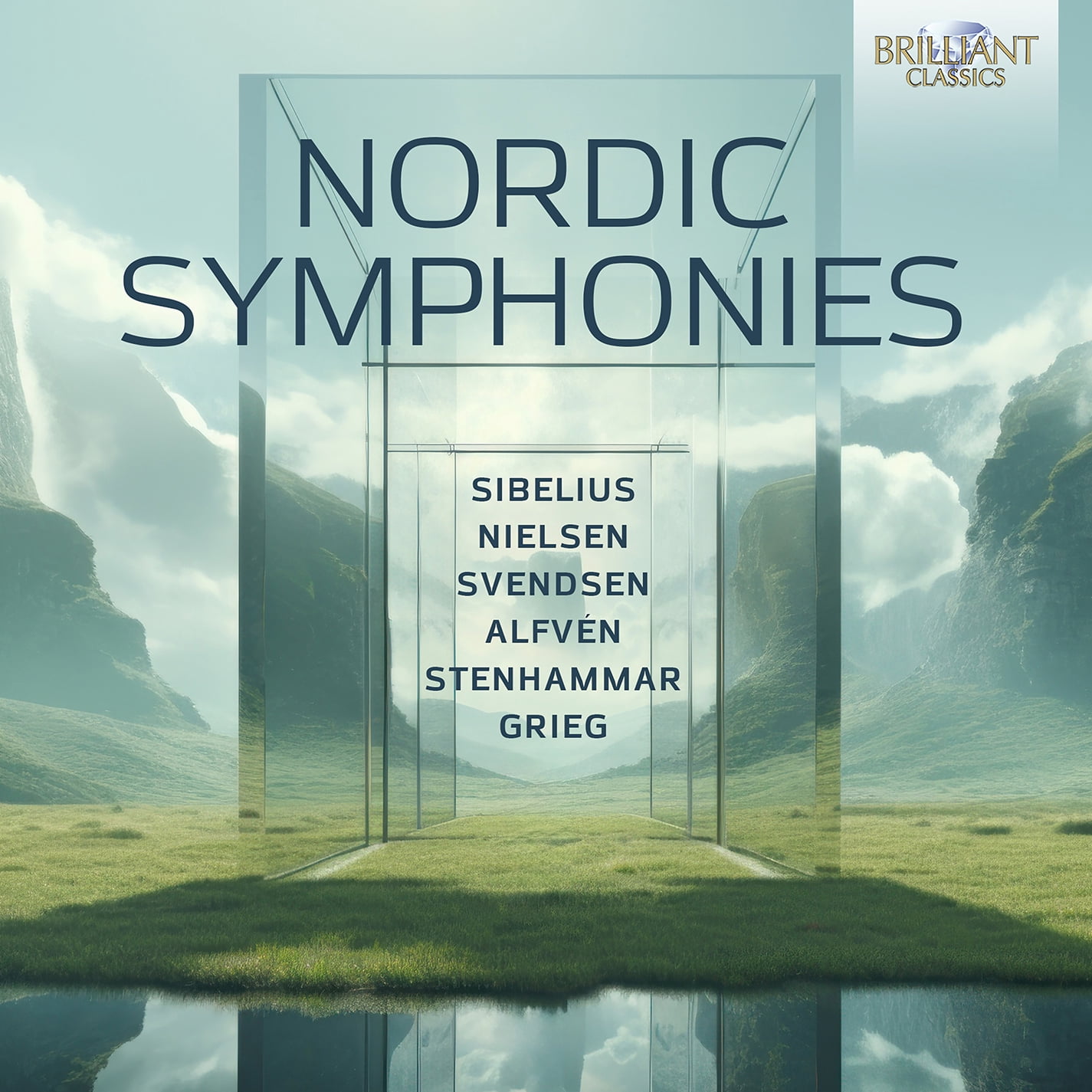
Berliner Sinfonie-Orchester - Nordic Symphonies - Music & Performance - CD
Product details
| Management number | 255030268 | Release Date | 2026/11/21 | List Price | US$15.90 | Model Number | 255030268 | ||
|---|---|---|---|---|---|---|---|---|---|
| Category | |||||||||
From the outset of his career, Jean Sibelius was recognised as an outstanding representative of a musical language perceived as typically Finnish. He is considered the Nordic composer, in whose works the never-ending expanses of the "land of a thousand lakes" are reflected. In Finland, as a result of many years of foreign rule, the dawn of the 20th century saw a veritable outbreak of nationally inspired artistic activities., It was a time of cultural and national self-discovery for Sibelius, too. He allowed himself be stimulated by the whole of Finland's folklore tradition, without resorting to specific examples of folksong: "There is a prevalent false opinion that many of my themes are folk melodies. But up to now I have never utilised a theme that was not of my own invention." Not until the age of 34 did Sibelius venture onto the slippery surface of symphonic composition; his symphonies are interpreted as musical expressions of the austere, inscrutable Nordic landscape, constructed as expansive fantasies. For many years, Carl Nielsen was viewed outside his native Denmark as the poor cousin of his more famous Scandinavian counterparts, Grieg and Sibelius. Yet his achievements as Denmark's greatest symphonist of the 20th century were, if anything, even more remarkable than the successes of his geographical neighbours. Nielsen's symphonic output is some of the most remarkable of it's time. Although he was trained at the Copenhagen Conservatoire in the strict tradition of the Viennese Classicists, he ultimately rejected the philosophies and styles that consumed so many of his contemporaries. The Norwegian conductor and composer Johann Svendsen was born in 1840 in Christiania (now Oslo). At the age of 21 Svendsen set out to tour Sweden and North Germany as a violinist, and the Swedish-Norwegian consul was impressed enough by Svendsen's playing to arrange a scholarship for him to study from 1863 at the Leipzig Conservatory, where his teachers included the violinist Ferdinand David and the composer and pianist Carl Reinecke. It was there in 1867 that he finished his Symphony No. 1 in D major Op. 4, a work that Grieg later described as showing scintillating genius, superb national feeling and really brilliant handling of an orchestra. In 1872 Svendsen returned to Christiania beginning a fruitful period that saw the creation of his Symphony No. 2 in B flat major Op. 15. The music of Hugo Alfven has always been close to the hearts of the Swedish people. More than any other composer he is regarded as representing the spirit of the country. This might also be due to the fact that for many years he lived in Dalecarlia, the province where genuine folk music tradition is at it's strongest. While many music lovers know Alfven best as the popular, cheerful entertainer in compositions such as Midsommarvaka ('Midsummer Vigil') (the best known piece of Swedish music outside Sweden), his five symphonies and his symphonic poems reveal a different, more elegiac and often more dramatic side. His First Symphony (1897) has a melancholy Sturm und Drang mood that recurs at intervals in his later compositions, but there is also a life affirming side that flourished in his Second Symphony, two years later. When Alfven began to plan a third symphony, he felt he needed a change of surroundings and chose Italy, the nature and culture of which had impressed him strongly during earlier visits. It was in Sori, just outside Genoa, that the Third Symphony began to take shape, and it became one of his most brilliant and harmonious creations. Alfven says of it: "The symphony has no programme, it depicts neither concrete nor abstract. It is an expression of the joy of living, an expression of the sun-lit happiness that filled my whole being". In the early spring of 1892 Wilhelm Stenhammar made his debut in Stockholm in four different capacities: as a piano soloist with orchestra, as a recitalist, as a chamber musician and as a composer. But it was in Sweden's second city, where he had been made artistic director of the orchestra in 1907, that his Symphony Op. 34 saw the light of day: dedicated to "my dear friends, the members of the Goteborg Symphony Orchestra". He was to remain as chief conductor until 1922. That symphony, which had it's first performance under the composer's direction on 22 April 1915, was in fact Stenhammar's second and is today called Symphony No. 2, even if the composer himself never gave it that number. "No symphony has been hedged about with so many reservations as the 20-year-old Edvard Grieg's 'forbidden' Symphony in C minor. But there were no such reservations about our work in recording it!", recounts Bjarte Engeset, who conducts it in the set. "From the first bar we were caught up in it's positive, youthful energy, and by the potential of it's many fresh musical ideas." During the Symphony's 113-year enchanted sleep since Grieg's withdrawal of it, scholar after scholar has written about it disparagingly, with much discussion of the Symphony's style, all too often based on the question: what are it's unoriginal or unsuccessful features? But it was Grieg himself who began the tradition with his admonition that it "must never be performed". Now, however, very few feel, on moral grounds, that the work should not be performed. There is a strong argument that today we have the right to investigate things of which artists themselves were not wholly conscious. "The energy in the Symphony makes me want to devote all my musical skill to it," Engeset exclaims, "and be able to say, 'Edvard, listen to this, listen to this: is this not good music?'"
- Berliner Sinfonie-Orchester - Nordic Symphonies - Music & Performance - CD
- Music
- Brilliant Classics
- Classical
| Performer | Berliner Sinfonie-Orchester |
|---|---|
| Music genre | Classical |
| Media format | CD |
| Is collectible | Y |
| Has parental advisory label | N |
| Number of discs | 1 |
| Series title | Music & Performance |
| Track listing | Coming Soon! |
| Record label | Brilliant Classics |
| Composer | Jean Sibelius, Carl Nielsen, Johann Svendsen, Hugo Alfven, Wilhelm Stenhammar, Edvard Grieg |
| Digital audio file format | CD |
| Music media format | CD |
Bestseller ranking
Motorcycle Travel Bags

Customers who viewed this product also viewed
Classical Composers

Correction of product information
If you notice any omissions or errors in the product information on this page, please use the correction request form below.
Correction Request Form